English version
Entrevista a Pablo Urquízar en revista de posgrado naval de EE. UU.
El coordinador del Observatorio del Crimen Organizado y Terrorismo de la UNAB, Pablo Urquízar, conversó con Cristina Matei sobre su libro “Radiografía de la violencia y el terrorismo en la Macrozona Sur: problemas y desafíos actuales” en la Revista de Escuela de Posgrado Naval de EE. UU
Professor Pablo Urquízar Muñoz
Interviewed by Dr. Cristiana Matei, US Naval Postgraduate School
On 7 January 2025, Dr. Cristiana Matei interviewed Professor Pablo Urquízar Muñoz to discuss his book, Radiografía de la violencia y el terrorismo en la Macrozona Sur: problemas y desafíos actuales (An Analysis of the Violence and Terrorism in the Southern Macrozone: Current Issues and Challenges). The interview was transcribed and translated from Spanish by Sally Baho and has been edited for clarity and readability.
Matei:
Thank you, Professor, for your book that provides an x-ray of the internal security environment in Chile, focusing on terrorism. Can you describe your research process for that book? What motivated you to write it? And what sources did you rely on most in this research?
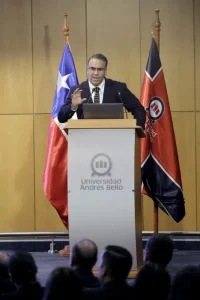 Urquízar:
Yes, of course. The book is rooted in a real and ongoing situation. I served as the Presidential Delegate for Security in Chile’s southern macrozone, which includes the regions of Biobío, Araucanía, Los Ríos, and Los Lagos. In that role, I was responsible for security across this territory. Based on my firsthand experience, I felt compelled to write a book that would provide an academic reflection of the complex realities unfolding there.
During my time in the region, I witnessed how both Mapuche and non-Mapuche families lived in fear due to the actions of radicalized and terrorist organizations. My motivation was to convey this reality both to the rest of Chile and to the international community and to contribute to the discussion on how to address a conflict that dates back to 1997. That year marked the first major attack in the commune of Lumaco in the Araucanía region. Since then, the area has experienced over 7,067 acts of violence, resulting in 1,192 injuries, more than 47 deaths, and the destruction of more than 3,907 properties. Just yesterday, three new attacks occurred in different communes of Araucanía, underscoring the persistent and urgent nature of the problem.
Despite the implementation of a constitutional state of emergency in these regions since May 17, 2022, which includes joint operations by Chile’s national police (Carabineros and the Investigative Police) and the Armed Forces, the conflict remains unresolved. The state continues working to restore peace and security for those living in these affected areas.
Matei:
And what sources did you consult most? Literary sources, or interviews with people from the four regions?
Urquízar:
Yes, there are multiple sources that informed the book. First, there are official sources, particularly statistics provided by the Carabineros of Chile. These include detailed records of terrorist organizations operating in the southern macrozone, the coordinates of attacks, the types of attacks, and the nature of violent acts. This data allows for a comprehensive analysis of where these events occur, which organizations are involved, the forms of violence they employ, and patterns over time. It also offers insight into the government’s response. This serves as the foundation from an official standpoint.
The second type of source comes from the media. In the southern macrozone, radicalized and terrorist groups use around three or four specific media outlets to communicate their actions. These platforms are highly relevant due to their direct or indirect links to these organizations. Each time an attack occurs, these media often publish statements claiming responsibility and explaining the intent behind the act. Outlets such as Radio Cruz and the Auqin website provide real-time information about incidents in the region. They are useful for analyzing the identity, operations, and ideology of each group in detail.
A third source is national academic literature. Many scholars have written extensively about what is often referred to as the Mapuche conflict. Some frame the violence as a result of longstanding tensions between the Chilean state and the Mapuche people. From this perspective, terrorism is viewed as an escalation of a broader political and historical struggle. This body of academic work provides essential context and is a key reference point in understanding the evolution of the conflict.
The fourth source draws from international experience, particularly forms of nationalist terrorism. The violence in the southern macrozone can be understood as nationalist in nature, with the aim of achieving the national liberation of the Mapuche people from Chilean state control. This mirrors cases like that of Euskadi Ta Askatasuna (ETA) in Spain, where the goal was the national liberation of the Basque Country. The similarities go beyond rhetoric and extend to tactics and organizational structures. Spain’s sixty-year experience with ETA, from 1958 to 2018, offers valuable lessons on how such conflicts can be managed and resolved.
Finally, the book also draws on insights from meetings and interviews with various stakeholders. These include members of the armed forces, political authorities, former officials, victims of violence and terrorism, and civil society organizations. Their perspectives helped shape a more nuanced and grounded understanding of the situation on the ground.
Together, these diverse sources formed the basis for writing the book and provided a comprehensive view of the violence and terrorism in Chile’s southern macrozone.
Matei:
You mentioned the intended audience for your book, primarily the Chilean public, but not exclusively. In the context of our journal, what is the main message you hope to convey—not only to readers in general, but specifically to the CTX audience—through your book? What is the core message you want to leave them with?
Urquízar:
Terrorism is a global phenomenon that threatens the very foundations of any nation, such as the rule of law, democracy, and fundamental rights. It is not just a challenge for one country, but a shared struggle across the world. While it may take different forms in different regions, its core remains the same: the use of violence against people to achieve political goals.
This book aims to contribute not only to the national understanding of terrorism in Chile, but also to raise international awareness that this kind of terrorism exists within Chile’s borders as well. Addressing it is not solely Chile’s responsibility. It is a global challenge that demands a united response from the international community. All states must work together to confront this threat, which affects us all.
Matei:
As you mentioned in your book, in your presentation, the current problem of indigenous terrorism in Chile does not arise from the inadequate implementation of the indigenous law. Could you expand on this argument and explain how this gap or obstacle could be overcome, for example? Are there lessons learned, perhaps from Spain, or best practices from the history of Chile or beyond the borders of Chile, that decision makers can use to address this challenge?
Urquízar:
Yes, of course. The book also addresses this issue, which is not limited to Chile but extends into southern Argentina as well. The nationalist terrorism carried out by these radicalized groups seeks what they call the Mapuche national liberation, aiming to establish a Mapuche state known as Wallmapu, which spans both southern Argentina and southern Chile. Their separatist terrorism is rooted in the belief that the Chilean and Argentine states have usurped Mapuche territories. From their perspective, the violence they use is a means to reclaim their land, rejecting the sovereignty and rule of law of both countries.
To address this complex problem, it is essential to take a comprehensive approach. First, it is crucial to stop and dismantle the leadership and members of these radicalized and terrorist organizations. The book identifies ten such groups operating with direct links between Argentina and Chile, sharing intelligence and counterintelligence and using high-powered weapons such as war rifles. Their main objective is territorial control, aiming to create zones where neither Argentine nor Chilean law applies. Therefore, the priority must be to apprehend these groups and dismantle their networks to restore the rule of law in the affected areas.
Secondly, it is essential to combat the misinformation spread by these radicalized terrorist organizations. They use the media to distort the reality of the situation, shaping a narrative that misleads not only their members but also a wider audience about the nature of their demands.
A third important point concerns the need for a national strategy against terrorism. Unfortunately, Chile currently lacks a comprehensive strategy to address terrorism. By comprehensive, I mean an approach that goes beyond the pursuit and arrest of perpetrators and encompasses the four fundamental pillars identified by the United Nations. The UN has established a global strategy against terrorism, and similarly, the European Union recently updated its counterterrorism strategy for 2023–2027. Spain also maintains a national strategy focused on four key areas: prevention, protection, pursuit, and response. expanded into southern Chile, it recognized certain land titles called grant titles to Mapuche communities. These titles acknowledged the communities’ right to specific territories. Unfortunately, the state has yet to fully honor this obligation, leaving many Mapuche communities without proper legal recognition or control over their lands. Radicalized and terrorist groups exploit this unresolved debt as a powerful argument to gain support within the Mapuche population. While the land issue is not the root cause of the violence and terrorism in the southern macrozone, it is often used as a justification for attacks.
 Additionally, it is important to recognize that the violence and terrorism in the region are no longer driven solely by ideological or political motives. Increasingly, these groups are involved in organized crime, including illegal logging, drug trafficking, arms and ammunition smuggling, and vehicle theft. This has created a dangerous overlap between the Chile, however, does not yet have such a framework. Recently, a new anti-terrorism law was approved and is expected to come into effect in the coming months. This law mandates the development of a proactive anti-terrorism strategy, which is a highly significant and positive step forward.
A fourth key factor concerns intelligence. Unfortunately, modernizing Chile’s intelligence system remains a significant unmet obligation for the state. There has been a bill pending in the National Congress since 2018, and we hope it will soon be enacted to enable a more effective response to these challenges.
A fifth important aspect concerns what is known as the land issue. Between 1884 and 1929, when the Chilean state original political terrorism and criminal activities, intensifying the threat and complicating efforts to address the situation in the southern macrozone.
Matei:
Let’s delve deeper into the 10 groups you identified in your research. These groups appear very similar to others operating not only in Latin America but also in parts of Africa. For instance, I know a bit about Mali—we have students from the Sahel region at the Naval Postgraduate School, as well as members of the CTX audience who might be interested. Could you provide more details about the paramilitary nature of these groups and their connections to illicit activities such as drug trafficking and human trafficking? Which trafficking networks are they linked to, and what are their primary targets? For example, when discussing ETA, the Spanish armed forces and civil guard were primary targets. Who are the targets of these groups in Chile? Additionally, what forms of extremist violence are they carrying out? What specific tactics of violence or terrorism do they employ? Finally, how do these groups compare to others internationally—like ETA, Al Qaeda in the Islamic Maghreb, or the Tuareg insurgents in Mali? What are the similarities and differences?
Urquízar:
There are currently 10 radicalized and terrorist groups operating in Chile’s southern macrozone, including Coordinadora Arauco Malleco (CAM), Wei Chamacupacu, Malleco Mapuche Resistance, Lafkenche Mapuche Resistance, Huiche Mapuche Resistance, Mapuche National Liberation, WTKM, Ultra Mahuida Territorial Resistance, and emerging groups like Cautín and Wenche Mapuche Resistance. CAM is considered the main or “mother” group, influencing both Chile and Argentina. It claimed its first attack in 1997, targeting a forestry company in Lumaco, with an initial focus on expelling extractive and capitalist-linked companies from Mapuche territory to establish a Mapuche nation state.
Over time, internal power struggles led to splits and the formation of other groups. Their targets expanded beyond companies to include Catholic and Evangelical churches, seen as opposing the Mapuche worldview, and schools, which represent the Chilean state’s official education. These groups seek to eliminate these institutions as part of their broader objective to assert territorial and ideological control.
One objective is law enforcement and security forces. For example, on April 27, 2024, the Malleco Mapuche Resistance carried out a violent attack in Cañete, Arauco Province, Biobío Region. They ambushed three Carabineros, Chilean police officers, seized their weapons, executed them, and then placed their bodies in the police vehicle. About 15 minutes later, they drove the vehicle to the main avenue and set it on fire. This brutal act was clearly intended as a message against the police and anyone seeking to uphold the rule of law in the region.
Another objective is what they call yanaconas. In Mapudungun, the language of the Mapuche people, yanacona means traitors. These are members of the Mapuche community who reject the tactics and ideology of the radicalized and terrorist groups. As a result, these individuals are labeled enemies and targeted for elimination. Many have been murdered for this reason.
Overall, these groups pursue multiple objectives, all aimed either explicitly or implicitly at rejecting the rule of law and asserting territorial control. In the areas they operate, these radicalized organizations effectively dominate the territory. From my research, I identified five common elements shared by these groups, which I will outline next.
The first key element is territorial control. These radical and terrorist groups, driven by separatist goals, aim to expel Chilean and Argentine authority from their territories. Territorial control is central not only to their political objectives but also to their involvement in transnational criminal activities like drug trafficking and wood theft. They adopt tactics similar to groups such as Jalisco New Generation and the Gulf Cartel. Thus, controlling territory is both a political and criminal strategy for them.
A second is the rejection of the state, that is to say, everything that the state itself means, from the police, from the armed forces, from the judiciary, from the prosecutors, from the schools, from the health centers themselves. These organizations also reject as a way of expressing the autonomy of these territories on the part of these radicalized and terrorist organizations.
A third common feature is the claim that detained members of these groups are political prisoners because they are imprisoned for their beliefs rather than for serious terrorist crimes. This claim is clearly false. In Chile, those who are incarcerated are held accountable for murder, drug trafficking, terrorist acts, and organized crime, not for their ideology or way of thinking.
A fourth element involves how these groups communicate their political objectives. Whenever they carry out an attack, a specific organization claims responsibility, attaching a political message. These messages often call for the liberation of so-called political prisoners, advocate for Mapuche national liberation, or reject the state of emergency imposed in the southern macrozone, among other political demands.
And finally, the fifth common element is the instrumentalization of the legitimate demands of the Mapuche people to hide their crimes, pure and simple. They falsely claim to represent the Mapuche people and from that perspective they hide their lucrative crimes, such as drug trafficking, arms trafficking, theft of wood, or ammunition trafficking and vehicle theft. These are the five most important common denominators.
Matei:
They seem very well organized and also very similar to other organizations in other countries in terms of their objectives and modus operandi, right? Let’s shift the focus a bit to talk about government responses. You mentioned the state of emergency, which seems somewhat permanent in this area, right? Also, the processes and collaboration between agencies—the police, the Chilean intelligence system, but also the armed forces, the Carabineros, who are linked with both the police and the armed forces. Could you explain your findings? I think this is important context for our CTX audience. And is there a role now, as you already mentioned, but also in the future for the armed forces in the response or combat of these types of organizations? If so, what is that role?
Urquízar:
Historically, the state neglected these territories for a long time, leaving the police to handle a threat far beyond common crime. This allowed radicalized groups to grow, developing paramilitary capabilities, intelligence networks, and access to advanced weapons. In response, the state of emergency declared in May 2022 in the southern macrozone enabled joint efforts by the police, investigative units, and armed forces to reestablish state presence. This has led to a 56 percent reduction in violence between 2021 and 2024, more arrests, and the dismantling of key terrorist leaders. However, attacks still occur regularly, showing that the state’s response is necessary, but insufficient on its own.
Unlike Spain’s fight against ETA, which relied mainly on police and civil guard forces, Chile needed to involve the armed forces due to police limitations. This strategy has produced positive results and has been supported by over 52 bipartisan congressional approvals for the ongoing state of exception, demonstrating rare political unity.
Such unity of state action—across executive, legislative, and judicial branches—is crucial to effectively confronting terrorism. The challenge now is maintaining this unified approach beyond the upcoming government change. Without institutionalizing this as state policy rather than just government policy, there is a risk that progress could be undone and the problem will deepen again.
A second element is what is still missing, which I already mentioned: the new anti-terrorism regulation. Between 2014 and 2022, there were 7,067 acts of violence and terrorism recorded by the Carabineros of Chile. The Global Terrorism Index from the Institute for Economics and Peace, based in Australia, ranked Chile 17th in the world in 2024.
Furthermore, people in the southern macrozone are fully aware that terrorism exists there—which is why a state of exception has been in place for over 3,000 days. Unfortunately, until very recently, this anti-terrorism regulation did not exist. For the past 20 years, there has not been a single conviction of terrorists in Chile. This clearly shows there is a problem with the regulation.
Either we are all living on another planet and terrorism does not actually exist, or there is a complete failure of state regulation to confront terrorism. Evidently, it is the latter, a total failure of state regulation to face terrorism. Therefore, there is a major challenge in properly implementing the new anti-terrorism regulation in Chile.
And I would also say a third point is what, in my view, Spain did—again following the same line. Here in Chile, there is still a lack of political agreement. In Spain, the analysis of how they managed to defeat ETA is clear. Obviously, other types of terrorism still exist, such as jihadist terrorism, but Spain’s international focus succeeded in defeating ETA, which is now dismantled.
One of the key elements was the political agreements made. One of the most fundamental and important agreements took place on December 8, 2000, between the two main Spanish political forces: the Spanish Socialist Workers Party and the Popular Party under the leadership of José María Aznar. Transversally, what they said was: “Look, terrorism must be removed from political disputes because terrorism is against the Spanish state.” Terrorism is contrary to Spain regardless of whether the government is left or right. Terrorism is against the two most important values a state can have: democracy and fundamental rights. Therefore, we all have to unite the action of the state to combat it. Such a relevant pact in this area does not exist in Chile. It simply does not exist. And this clearly reflects a fragility and complexity in how Chile faces this issue today.
And one last point I would say is also weak, it seems to me, is the prison system. The prison system is also a place where one might believe that when prisoners go to jail, social reintegration will occur. But in reality, what is happening far from social reintegration is that the radicalized terrorist organizations end up expanding and strengthening their territorial control, not from outside, but from inside the prison itself, even controlling spaces that belong to the state, such as the prison. If this is the case, there is clearly a complete challenge for the different branches of the state to regain that control, in order to enforce the rule of law and to completely eliminate the terrorist threat once and for all.
Matei:
I think the lack of a joint vision of governments on how to address and how to respond and how to combat these groups is the most challenging in this equation of security and democracy in Chile. We hope that the good lessons learned from Spain will be taken into account by the future government of Chile. I am thinking that like everything in civil-military relations, but also the relationship between security and the state and the government, there is no linear trajectory, there a sinusoidal relationship. If we are talking about mathematical issues, there are times when we are progressing, but there are times when we are going down. But I think that the lack of this vision that transcends the type of political color is the most challenging.
The last question is: what topic for future research do you think can emerge naturally or obviously from your book?
Urquízar:
There are several important lines of research here. First, disinformation stands out as a crucial area. Terrorism often aims to distort reality and manipulate information to achieve its goals. Studying disinformation as a tool of terrorism is essential to understanding how these groups influence perceptions and disrupt social order.
Second, the state’s vulnerability to corruption in the face of terrorism demands attention. Today’s terrorism in the southern macrozone is intertwined with organized crime, using corruption as a means to penetrate institutions and finance their operations. Understanding and addressing these weaknesses is vital.
A third key area is the protection of prosecutors, judges, and witnesses involved in these cases. These individuals face serious threats and intimidation from radical and terrorist groups, creating strong disincentives to cooperate with investigations. The lack of adequate protection undermines the rule of law and fosters impunity for terrorist organizations. Strengthening safeguards for these actors is critical.
A fourth important line of research is how to address the threat from a binational perspective, specifically through cooperation between Chile and Argentina. The effectiveness of this collaboration often depends on the current governments and how well they communicate and coordinate efforts. A useful comparison is Spain’s experience with ETA, which operated in both the Spanish and French Basque regions. One major obstacle to dismantling ETA was initially the lack of full support from the French government. Only when France fully engaged as a partner did true binational coordination take shape. Similarly, Chile and Argentina need a shared long-term vision of the threat, one that transcends changes in government or political sympathies. Exploring how to build and sustain such binational unity is a crucial area for research.
A fifth line of research is related to how to break what is called the money trail for terrorist financing. In other words, terrorists need funding to acquire weapons, carry out intelligence and counterintelligence activities, and support personnel. So, the question is how to cut off the money flow to effectively dismantle these networks. Finally, another important line of research concerns the regulations and implementation of the new anti-terrorism law. It is crucial to examine how this law is applied in practice and whether it will produce the desired results. This includes its preventive measures within the national strategy against terrorism. Analyzing the outcomes of this law is also a relevant area for research.
Matei:
Professor, thank you very much. It was a great honor to speak with you today. I learned many new things about Chile and the equation of security and democracy in Chile.